

A New Importer of Record (IOR) Framework Takes Effect January 5
November 19, 2026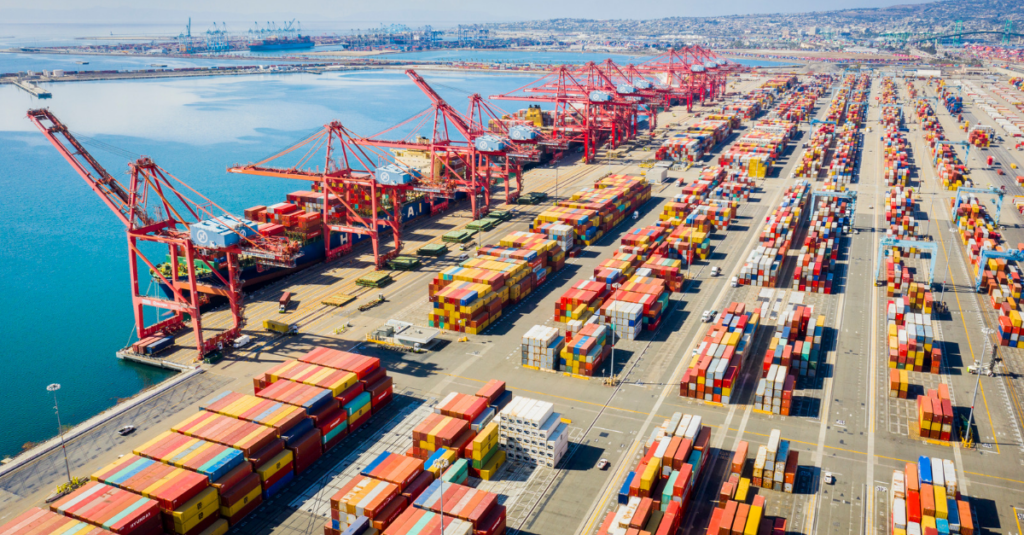
Early on Saturday, November 21, the Pacific Maritime Association (PMA) and International Longshore and Warehouse Union (ILWU) Local 26 reached a tentative agreement on a new contract covering about 250 terminal watchmen at the Ports of Los Angeles and Long Beach.
That an agreement was reached without a strike and potential picket lines other longshoremen would have honored and increased congestion and delays was welcome news for everyone. While positive, the news essentially removes what would have been one more contribution to the challenges Southern California ports are facing thanks to record imports and increasing rail backlogs.
What was agreed, and is the deal final?
The agreement is tentative, but the union is working under the terms of the old contract, pending a ratification vote for the new one. Terms have not been disclosed, and no ratification date has been announced.
The deal came after federally mediated talks ran late into Friday night, ahead of a contract expiration set for 12:01 a.m. Pacific Time on Saturday. In its statement, PMA thanked the Federal Mediation and Conciliation Service and the U.S. Department of Labor for their assistance, along with the Local 26 bargaining committee. The Wall Street Journal also reported on the agreement.
Until ratification is complete, the outcome is best described as a strike averted rather than a contract signed. Western Overseas will continue to follow the ratification process.
How did the negotiations reach this point?
The dispute involved a small, yet influential, group of workers and a long timeline. Local 26 watchmen verify credentials at terminal entrances, conduct security patrols, and report safety concerns. They represent roughly 2% of the ILWU workforce at the two ports, and negotiations over their contract had been underway for more than a year.
| Date | Activity |
|---|---|
| July 2025 | The watchmen’s previous contract expires; talks continue without a new agreement. |
| Late October 2026 | Local 26 members authorize a strike that could have begun on November 1. |
| Early November 2026 | Short-term extensions push the deadline back while bargaining continues. |
| November 6 | The parties extend the contract through November 20. |
| November 17-18 | A bargaining session ends without progress. PMA warns of the real potential for a strike and says the union is unwilling to extend the deadline again. |
| November 20 | Federally mediated talks resume. More than 100 trade and shipper groups sign a letter urging both sides to reach a deal. |
| November 21 | A tentative agreement is announced early Saturday. The existing contract is extended pending ratification. |
What was at risk if a strike had happened?
The PMA had stated that thousands of longshore workers, marine clerks, and foremen who were not party to the dispute were expected to honor a Local 26 picket line. Those workers are covered by a separate coastwide contract that runs through 2028, but had they declined to cross, vessel, yard, and gate operations could have halted at the affected terminals.
The scale of that risk was significant:
- Six container terminals employ Local 26 watchmen: one at the Port of Los Angeles and five at the Port of Long Beach.
- Those terminals handle approximately 85% of Long Beach cargo and 33% of Los Angeles cargo, more than half of the volume moving through the complex.
- PMA reported that the six terminals moved about 6.2 million containers in 2025.
The trade groups that wrote to both parties on November 20, including the National Retail Federation, the American Association of Exporters and Importers, and the U.S. Meat Export Federation, warned that holiday shipments, manufacturing components, and U.S. exports would all have been put at risk.
What about the pre-existing Southern California rail backlog?
While the agreement removes the threat of a strike, it has little to no impact on the containers that were already waiting for trains.
- Rail dwell is still rising. Rail-bound containers at the two ports averaged 8.16 days of dwell in October, up from 7.19 days in September, according to Pacific Merchant Shipping Association figures.
- Thousands of containers have waited nine days or more. Port of Los Angeles Executive Director Gene Seroka said on November 12 that about 9,500 rail-bound containers had been sitting nine days or longer.
- Volumes remain at record levels. The Port of Los Angeles handled 1,026,872 TEUs in October, its second-busiest month on record, closing out a five-month run of close to 5 million TEUs.
The railroads have added railcars, locomotives, and crews to work the backlog down, and the ports have said cargo will continue to move without interruption. Even so, inland-point intermodal (IPI) cargo routed through Los Angeles and Long Beach should be planned with additional transit time until dwell figures begin to fall.
Why is transpacific space still a concern?
The second issue is on the water. Spot rates on the eastbound transpacific have been falling, which might suggest that space is easy to find. Carriers are responding to those softer rates by withdrawing capacity.
Drewry’s World Container Index for November 19 reported ten blank sailings announced on the transpacific for the following week, up from four the week before. Its Cancelled Sailings Tracker for November 20 counts 42 blank sailings across the major East-West trades between November 23 and December 27, and nearly half of them are on the eastbound transpacific.
Schedule reliability adds to the pressure. Drewry reports that on-time performance on East-West trades fell to 34% in October from 40% in September, and it recommends early bookings, routing flexibility, and close monitoring of carrier capacity.
Three key takeways for importers and exporters to communicate internally.
The most disruptive scenario was avoided, and that deserves to be recognized. The conditions around it have not changed:
- The labor agreement is tentative until Local 26 members ratify it.
- Rail dwell in Southern California is elevated and has not yet turned downward.
- Carriers are actively reducing eastbound transpacific sailings through late December.
Western Overseas monitored the negotiations through the deadline and continues to work with its local drayage partners and ocean carrier partners to keep clients informed about cargo at the affected terminals.
Customers with questions about their shipments moving through these two ports should contact their Western Overseas representative directly for more information.
Frequently asked questions
Was there a strike at the Ports of Los Angeles and Long Beach?
No. PMA and ILWU Local 26 announced a tentative agreement early on Saturday, November 21, 2026, and no work stoppage took place.
Is the ILWU Local 26 contract final?
Not yet. The agreement must be ratified by Local 26 members. The existing contract has been extended until the ratification vote, and the terms of the tentative deal have not been disclosed.
Which terminals would a watchmen strike have affected?
Local 26 watchmen work at six container terminals: APM Terminals Pier 400 at the Port of Los Angeles, and Long Beach Container Terminal, Total Terminals International, Pacific Container Terminal, SSA Terminals Pier A, and SSA Terminals Pier C at the Port of Long Beach.
Are rail delays at Los Angeles and Long Beach over?
No. Average rail dwell reached 8.16 days in October, and thousands of rail-bound containers have waited nine days or longer. The railroads have added equipment and crews, but the backlog is still being worked down.
Is space on the eastbound transpacific tight?
Carriers are cancelling sailings to manage capacity. Drewry counted 42 blank sailings on major East-West trades between late November and late December, with nearly half on the eastbound transpacific, so early booking remains advisable.